
Programs & Initiatives
Small but Mighty: Modest Grants Designed to Make Significant Changes
The RHSC Small-Grants Program provides catalytic funding to support locally driven solutions to reproductive health supply challenges, aligned with the priorities of RHSC’s Member Groups. It also includes dedicated funding rounds targeting specific regions (e.g., Latin America and the Caribbean) or priority thematic areas.


$47+ million
Total funds leveraged
$100,000
Average
grant size
3.3 ROI
The Innovation Fund delivered
a return of more than three-to-one.
Both Competitive and Responsive
A flexible resource reacting sensitively to shifting priorities, the Small-Grants Program issues awards competitively during scheduled rounds, but also on an exceptional basis to address urgent or time-bound needs.

Funding for RHSC Members
Dedicated financial support for RHSC members and Member Group participants—particularly those based in low-resource settings—to test, adapt, and scale impactful supply-focused solutions.

Supply Lens
in Action
Supports projects that apply a strong supplies perspective, improving product choice, flow, and availability across reproductive health systems.

Advancing RHSC Strategy
Invests in initiatives that directly contribute to the RHSC Member Groups’ priorities, driving progress on reproductive health products availability, affordability, quality, and choice.

Success Stories
Discover how our members have used the Small-Grants Program to finance supply-oriented projects.

Argentina
In Argentina, Centro de Estudios de Estado y Sociedad designed and launched an open-source platform to help young people locate SRH and contraceptive distribution outlets, as well as safe and legal abortion counseling. The #Dónde web-based app provides geo-referenced information on more than 12,600 SRH distribution outlets and answers frequently asked questions on contraceptives.

Uganda
In Uganda, WoMena tested six novel distribution models for the Ruby Cup® menstrual cup, which offers ecologically sound menstrual health management to women with limited access to affordable sanitary products. Additionally, WoMena successfully advocated for the removal of import duties, laying the foundation for greater product affordability.
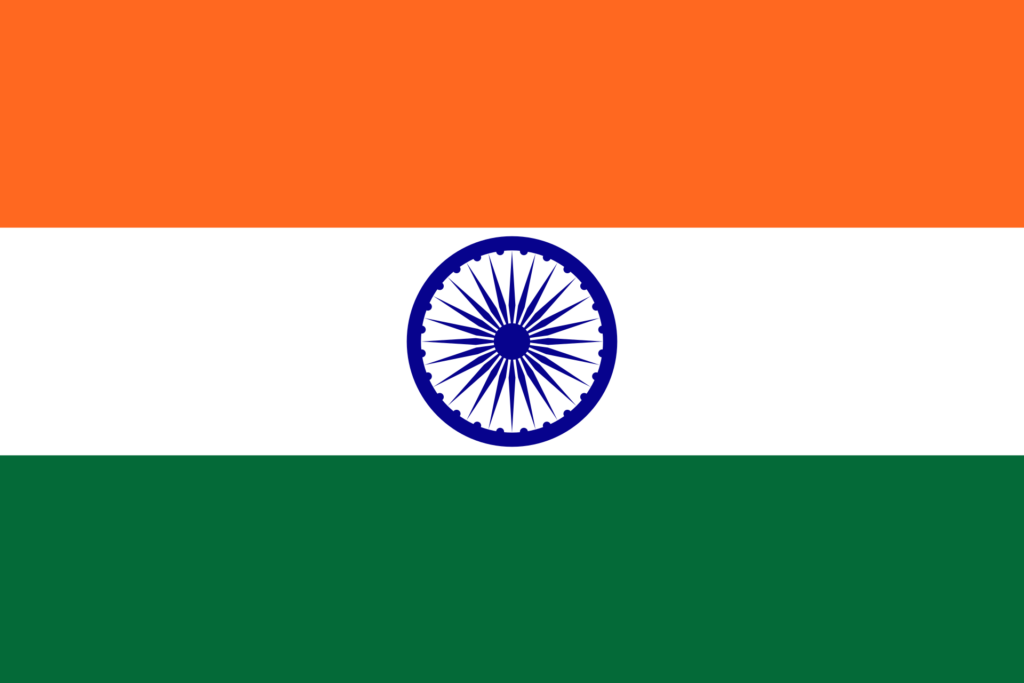
India
In India, Pregna International Ltd. received support from the program to launch Doctorstore, a pioneering e-commerce portal that has allowed more than 1,800 doctors from across Maharashtra State to purchase a range of quality-assured SRH commodities directly from suppliers for delivery within two to seven days. Within the first two years of operation, Doctorstore generated sales of 170,000 products, generating more than 150,000 couple-years of protection.
What Has the Program Supported?
The Small-Grants Program supports a wide range of activities. Find project summaries for all grants awarded below.
- John Snow, Inc. and Abt Associates jointly ran an eight-month Total Market Initiative in Honduras, bringing family planning providers together and segmenting the market to better serve clients.
- John Snow, Inc. also compiled a full inventory of English, French, and Spanish language professional development training programs for public-sector supply chain managers in developing countries.
- Marie Stopes International assessed logistics systems across three crisis settings to better understand the challenges facing agencies delivering emergency RH supplies.
- Action Canada for Population and Development ran a two-year effort to raise awareness of supply security in Francophone Africa and strengthen the French-language networks, media, and tools needed to meet country supply needs.
- Marie Stopes International, Futures Group, and UNFPA Madagascar jointly delivered an evidence-based Total Market Initiative in Madagascar.
- Population Action International produced an advocacy film putting a human face on reproductive health supplies.
- John Snow, Inc. identified and disseminated supply chain management best practices for community-based distribution programs.
- The Concept Foundation raised awareness of the WHO Prequalification Program, identifying hormonal contraceptive manufacturers best placed to achieve prequalification quickly.
- John Snow, Inc. also strengthened AccessRH by exploring the factors driving manufacturer business practices and market behavior.
John Snow, Inc. expanded and improved access to a database of more than 100 professional development opportunities for RH commodity managers, under the project Professional Development Opportunities for Public Sector Reproductive Health Commodity Managers II (ProDOPS II).
Population Action International facilitated country engagement in Istanbul +10 activities. The project gathered a decade of country-level experience with RH commodity security and presented lessons learned alongside strategic recommendations for the future.
- The Institute for Reproductive Health at Georgetown University developed a guide helping countries forecast supply needs where trend data is too thin to predict demand.
- Institut Bioforce Developpement supported planning for the People That Deliver consultation held in Geneva in June 2011.
- The International Planned Parenthood Federation updated the Directory of Hormonal Contraceptives database and developed strategies for its long-term sustainability.
Asociacion Benefica PRISMA translated the PATH Procurement Capacity Toolkit into Spanish and built a training course around it for cooperating agencies, government officials, and procurement personnel across Latin America and the Caribbean.
- Marie Stopes International Afghanistan launched a national RH Caucus to press the government and bilateral donors to prioritise reproductive health.
- The Uganda Family Planning Consortium improved contraceptive access by tracking budget lines, reporting shortages, and centralizing procurement scheduling.
- Marie Stopes Sierra Leone worked to remove import duties on family planning commodities.
- Marie Stopes Tanzania worked with local officials across 10 health districts to secure local resource allocations.
- PSI Burundi assessed the potential to extend social marketing into reproductive health social franchising.
- The International Consortium for Emergency Contraception collected point-of-sale pricing across 75 countries, finding that women in Francophone and Lusophone Africa pay some of the highest prices.
- Pregna International launched Doctorstore, an e-commerce portal serving more than 1,000 doctors in Maharashtra, India.
- FHI 360, with Medicines360 and Marie Stopes International, prepared an introduction strategy for a generic LNG-IUS in Kenya.
- The International Centre for Reproductive Health at Ghent University examined how provider motivation and performance-based incentives affect stockouts in Mozambique.
- Financing for Development and its partner Kangu piloted a crowdfunding platform across Bolivia, Guatemala, and Mexico with local IPPF affiliates, mobilizing more than $26,500 for safe births.
- Pharmaceutical Systems Africa developed a supply chain training roadmap adopted by the Liberian government as part of its post-Ebola strategy.
- Institut Bioforce trained 25 new Ministry of Health logisticians in Burkina Faso and formalized their role within the national health system.
- Abt Associates developed and field-tested a tool assessing government capacity to act as steward in total market interventions.
- EngenderHealth introduced the COPE CS quality improvement methodology across 10 districts in Malawi to tackle last-mile stockouts.
- i+Solutions added a supply chain e-learning module to university programs at Catholic University of Mozambique, reaching more than 200 students.
- IntraHealth International trained more than 1,000 health workers in the remote North Rift region of Kenya.
- Financing 4 Development concluded that social impact investors are willing to back generic contraceptive manufacturers in emerging markets.
- Management Sciences for Health reviewed universal health coverage schemes and their effect on access to family planning commodities.
- FHI 360 studied barriers to accessing low-cost pregnancy tests in Mali, Malawi, and Kenya.
- IPPF worked to position sexual and reproductive health within the post-2015 financing agenda.
- The International Consortium for Emergency Contraception gathered data on 13 priority commodities from over 100 national essential medicines lists.
- Georgetown University Institute for Reproductive Health reviewed the digital marketplace as a route to contraceptives across four countries.
- The Latin American Consortium Against Unsafe Abortion documented registration outcomes for misoprostol and mifepristone across six Latin American countries.
- Gynuity Health Projects raised awareness in Kazakhstan of a multi-level pregnancy test that lets women confirm completion of early medical abortion at home.
- Ipas piloted an mHealth app in Nigeria helping providers estimate monthly supply consumption and prevent stockouts.
- The Population Council mapped bottlenecks across the safe abortion supply chain and set out recommendations for expanding access. These grants were made possible by funding from Norad.
- Centro de Estudios de Estado y Sociedad launched a web app in Argentina giving young people georeferenced information on over 12,600 reproductive health outlets.
- VillageReach tackled youth access barriers in Malawi by training pharmacy assistants as mentors, leveraging $6 million in new USAID funding.
- Womena tested six distribution models for menstrual cups in Uganda and advocated successfully for removing import duties.
- Marie Stopes International China developed the first national service delivery guidelines for youth access to LARCs, with 64 percent of postabortion care patients under 25 choosing a LARC method within six months.
- Concept Foundation raised the profile of Ethiopia as a priority market for product registration, paving the way for five WHO prequalified maternal health products.
- Monash University assessed oxytocin quality across public health facilities in Oromia, Afar, and Addis Ababa. All samples passed sterility and endotoxin testing, while three failed content specifications, likely due to heat exposure.
- Management Sciences for Health worked to integrate oxytocin into the Expanded Programme on Immunization cold chain.
- Gynuity Health Projects assessed facility readiness to treat hypertensive disorders in pregnancy.
- Marie Stopes Uganda established commercial social marketing of menstrual cups in pharmacies to subsidize distribution to vulnerable women and girls.
- The William Davidson Institute assessed private-sector contraceptive distribution in underserved areas.
- VillageReach developed an adaptable cost modelling approach and Excel-based tool for supply chain decision-making.
- i+solutions introduced MEDEXIS, an electronic logistics management information system, across 30 emergency obstetric and neonatal care facilities in Burundi.
- Gynuity Health Projects supported country-level registration of mifepristone by emphasising its broader role as a women’s health medication.
- WASH United ran a global campaign against unfair taxes on menstrual health supplies, working with local stakeholders in Nepal and Tanzania.
- The Health NGOs Network mobilised Eastern African countries to increase reproductive health supplies investment.
- Jhpiego analysed how consumable and equipment availability affects family planning goals.
- Marie Stopes International Sahel evaluated ways to control supply chain temperature and humidity for remote rural users.
- Civil Society for Family Planning in Nigeria built political support for reproductive health supplies in the post-election period of 2015 by rallying advocates, holding press briefings, and developing educational materials.
- Karen Hoehn analysed the shifting global development financing architecture and its implications for commodity security, helping advocates insert references to reproductive health supplies into the Financing for Development zero draft.
- Health Games Kenya, a partnership between JSI and SNTL Publishing, produced a game delivering contraceptive information to young people, with weekly prizes encouraging players to keep building their knowledge.


Donor Support Is Key to Success
The small-grants program leverages RHSC’s diverse funding base to provide flexible support aligned with the evolving priorities of its Member Groups. Donors can contribute to the program as a whole or direct funding toward specific geographies or priority reproductive health supplies areas—contraception, maternal health, menstrual health, or safe abortion. Interested in supporting the small-grants program?
Expand access to life-saving reproductive health supplies where they are needed most.
Support local organizations to deliver rapid, country-driven solutions.
Drive lasting impact for women, families,
and communities.