


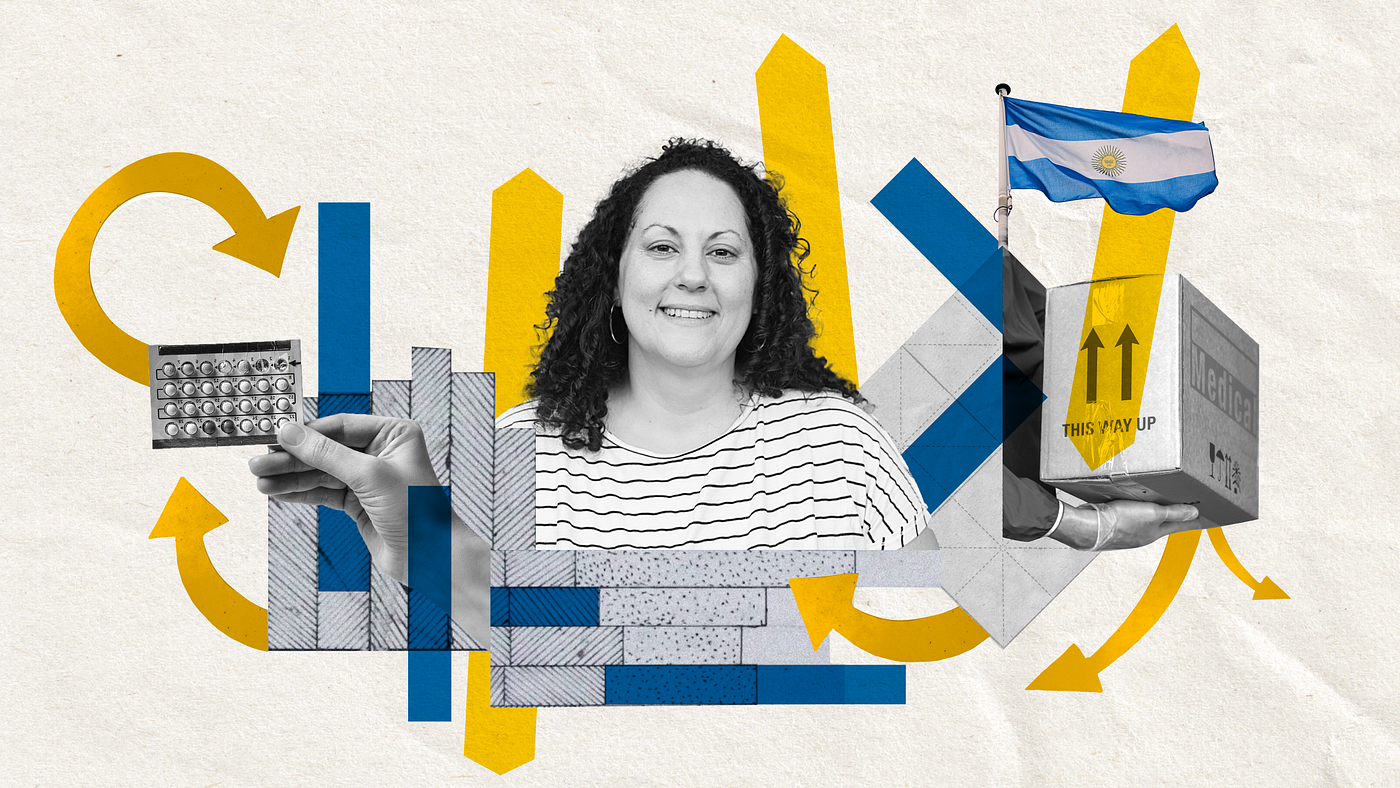
Ms. Claudia Panizza is an Argentinian professional social worker, about to graduate from a master’s degree on epidemiology and public health. She has been working at the Department of Sexual and Reproductive Health (SRH) in the Province of Buenos Aires (PBA)’s Ministry of Health (MOH), in commodity security, for more than 10 years. With a team of three people, Claudia’s work consists of estimating SRH supply needs, generating data to procure SRH supplies, following up procurement processes, receiving the supplies, analyzing how to distribute them across PBA and planning distribution with the MOH’s logistics team. Her program aims at reaching over a million people, mainly women in reproductive age, in the Province of Buenos Aires, the most populated province in Argentina.
Enriching experiences
Thanks to the LAPTOP scholarship RHSC awarded her, Claudia finished a diploma course in comprehensive logistic management in Universidad Austral. Claudia tells us that studying in a private university for the first time, with professionals working in the private sector, has provided her with a different perspective on supply chain management. She realized that a different logic on supply chain management applies to the private sector, compared to the public sector, where efficiency and technological barriers persist. This has challenged Claudia to think outside the box around the use of technologies and priority setting, focusing on becoming more strategic. In her final assignment, she used PBA’s MOH as an example to make a proposal for improvement that included environmental considerations. LAPTOP has motivated Claudia to keep pushing for improvements in her job, especially as she learned that important changes can be made without the need for huge financial investment.
This capacity-building opportunity has helped PBA’s efforts to strengthen supply chain management, a goal which RHSC’s ForoLAC has supported since 2024 in partnership with UNFPA’s LAC Regional Office and Country Office of Argentina, resulting, among others, in the improvement of data management for SRH supplies. These improvements have allowed the Department of SRH to be regarded as a reference point for other health units within PBA.

“LAPTOP has motivated Claudia to keep pushing for improvements in her job, especially as she learned that important changes can be made without the need for huge financial investment.”
Claudia Panizza
A background of gender equity
Claudia believes sexual and reproductive health are central to women’s rights in general, since they are related to other aspects of women’s lives that they need to thrive. The possibility of choosing the timing and spacing of children enables women to have access to education, health, and work. When Claudia understood this connection, she decided to dedicate her studies and career to women’s sexual and reproductive health and says she gets increasingly enthusiastic as she learns more about it, especially when considering the gaps and inequalities that persist in Argentina for women to access SRH. Claudia firmly believes that women’s health not only has an impact on women’s lives, but in the population in general, due to the fundamental roles that women play in society.
A setback for SRH in Argentina
Currently in Argentina, access to SRH supplies faces several barriers. Firstly, social and economic challenges and an increase in the prices of medicines are impacting affordability, which makes them more reliant on public systems. In addition, it has been a year that the national government (NG) has not distributed SRH supplies to the provinces in the same volumes as before. The NG was the main supplier of SRH commodities; for PBA, that meant 70% of all the SRH supplies they managed. Faced with the gap left by the NG, provincial governments have had to expand the range and quantity of products they procure. For instance, PBA mainly focused on procuring LARCs and relied on the NG for oral contraceptives, which are the most used contraceptives in Argentina. Now they are procuring oral contraceptives too, among other basic SRH commodities. Claudia cautions against a rise in unplanned pregnancies as a direct result of this issue.
SRH supplies for all
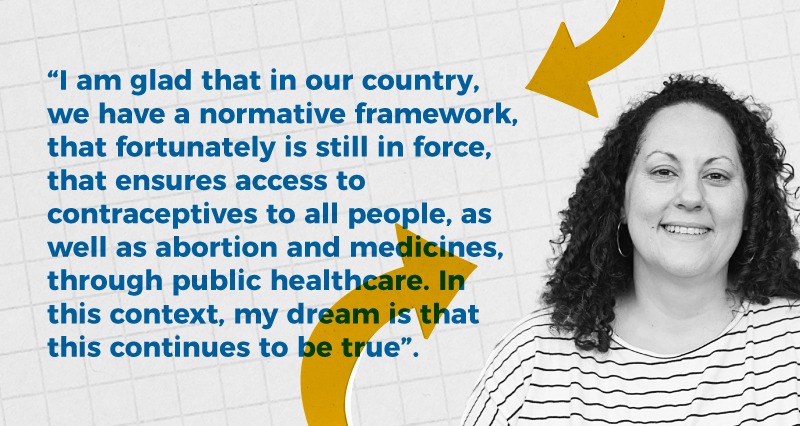
Claudia hopes that SRH becomes critical in public debates and discussions that can transform the current situation, and make sexual and reproductive health and rights even more relevant than before. This is not just about monetary investment, she says, but about creating strong institutions and keeping qualified teams working through changing political administrations.