


Halima Lila and Jennifer Chinoye Amadi welcome the ongoing global conversation around menstrual health supplies at the recent RHSC General Membership Meeting in Accra
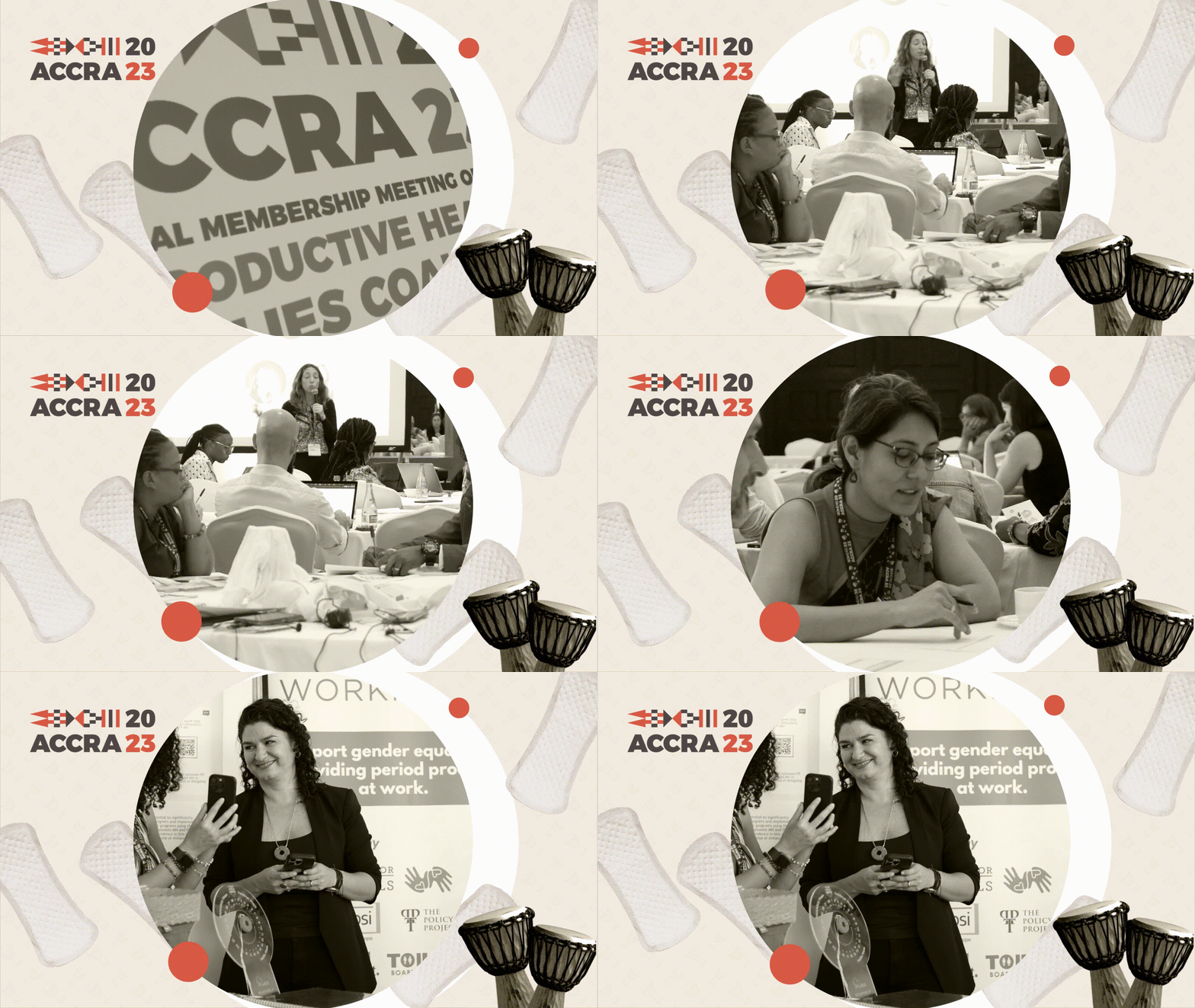
Our connection with the Reproductive Health Supplies Coalition (RHSC) has been an incredible part of our professional growth through meaningful youth engagement from 2016 onwards, and still relevant to us as skilled professionals today. RHSC is a coming-together of experts, advocates, scientists and donors whose work resonates with the provision of quality reproductive health supplies for low and middle-income countries.
Across the broad range of RH supplies, we are most frequently engaged with Menstrual Health supplies/services — supply side factors, quality, choice, standardisation, and sustainability. As such, we have a special affinity to, and interest in, menstrual health supplies across the diverse working groups and workstreams at RHSC such as the New and Underused Reproductive Health Technologies, Advocacy and Accountability, Systems Strengthening, and others. Our special interest in menstrual health is because we consider it a critical entry point to early and appropriate use of sexual and reproductive healthcare services for adolescents and young people, especially in Africa.
Overcoming setbacks
Reproductive health supplies are essential for everyday living, particularly for girls and women all over the world. We understand as young women how significant it is to have access to quality reproductive health supplies, and more importantly, we note the dire consequences of stockouts of these essential supplies in crisis-prone and war-torn areas, including very hard-to-reach communities in low and middle-income countries.
This is why we were beyond excited to attend the RHSC’s General Membership Meeting (GMM) in Accra, Ghana, which was a convergence of global reproductive health supplies experts to strategize for better quality RH supplies, uninterrupted last mile distribution and strong gender integration in supply chain management.
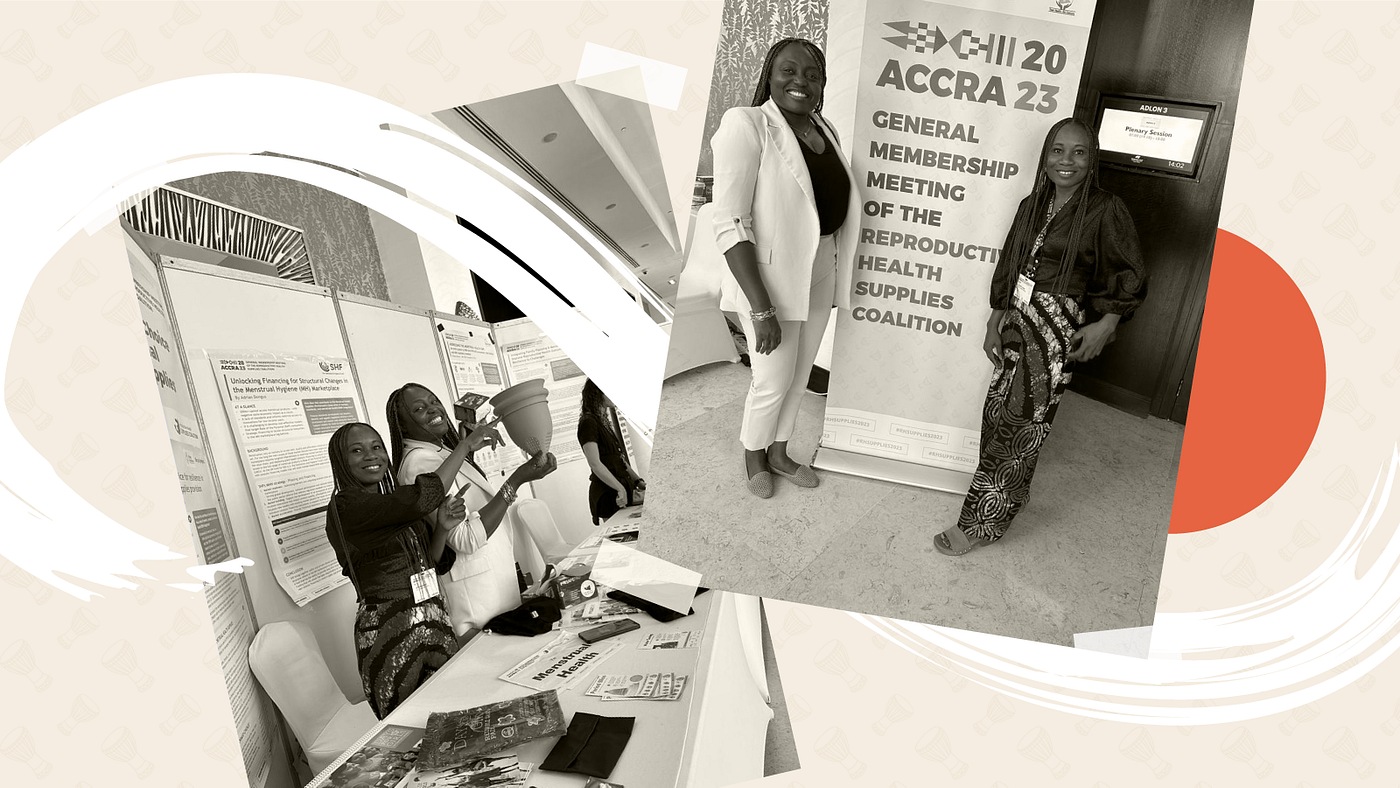
Before the COVID-19 global health emergency, the RHSC had met in Kathmandu in 2019 and we were pleasantly impressed by the menstrual health discourse which left us with great joy and fulfilment. Then, the COVID-19 pandemic almost brought all our gains to an end. Countries in low- and middle-income countries in regions like Sub-Saharan Africa (SSA) faced an enormous challenge during the pandemic as it impacted access to essential reproductive health supplies. Most of the supply chain systems in SSA were overwhelmed and grossly under-resourced with supplies. We note the global progress in expanding opportunities for girls and women to get and utilize reproductive health supplies but still, girls and women across SSA have challenges when accessing SRHR services and supplies largely due to low purchasing power. Regardless, a glimmer of hope emerged when the General Membership Meeting was announced to take place in Accra, Ghana. We wanted to see the global menstrual health community come together to continue the critical conversation initiated in Kathmandu.
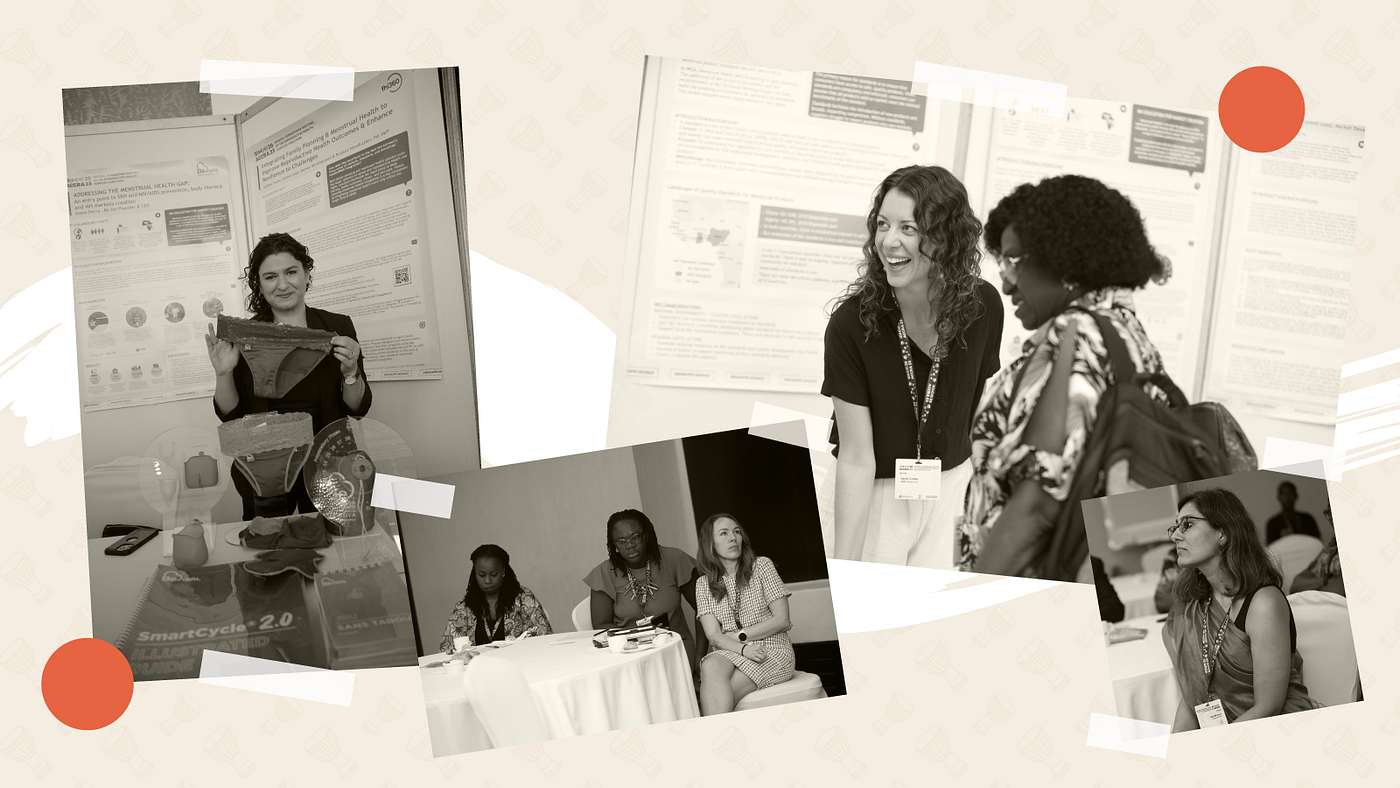
In Accra, we co-facilitated a full session for the menstrual health supplies community with other incredible members & leaders of the Menstrual Health Supplies Workstream. The session — the workstream’s first ever standalone session at a membership meeting — included a review of the workstream’s strategy design, and integration of Menstrual Health into the SRHR Space with poster presentations on:
In addition to the integration of menstrual health into broader SRH, we also looked at the Global Menstrual Health Supply Standards & Markets Status of Standards for Menstrual Products in LMICs. Acknowledging the importance of a flourishing market to making menstrual health supplies accessible, Adrian Dongus introduced the Sanitation & Hygiene Fund’s approach to making structural changes in the menstrual health marketplace.
As usual, with every RHSC General Membership Meeting that we have attended, the end of the meeting left us feeling nostalgic. Yet, while we reminisce over missing friends (old and new), and celebrate freshly minted collaborations, the RHSC GMM is, for us, first and foremost, an event that;
- Has brought different RHSC workstreams together to build linkages, strengthen collaborative partnerships and imagine new ways of working together to ensure that RH supplies, including menstrual supplies, are accessible across the globe.
- Is building synergies for the SRH supplies market approach as a critical component in developing countries to make sure access to SRH supplies especially menstrual health reached for girls and women in all their diversities.
- Continues to strengthen meaningful youth engagement across all the Reproductive Health Supplies implementing mechanisms and workstreams.
Halima Lila is the Co-Chair of the RHSC Menstrual Health Supplies workstream and Jennifer Chinoye Amadi (PhD.) is a gender & development consultant.