




In four refugee-hosting districts in Uganda, the National Midwife Association of Uganda is leading a quiet shift in maternity care, helping health workers optimize prevention of and respond faster and more effectively to one of childbirth’s deadliest complications: severe bleeding after delivery, commonly known as postpartum hemorrhage, PPH.
Uganda hosts a large population of refugees from neighboring countries, primarily due to ongoing conflicts in the region. These settlement areas are often extremely overcrowded, and the health facilities within them experience high caseloads and patient volumes. Refugees generally cannot choose to leave the settlement to seek care elsewhere; they must rely on the facilities assigned to the settlement. This places significant pressure on the health centers serving these populations.

Efforts to strengthen response to PPH
Postpartum hemorrhage (PPH) accounts for about 38 percent of maternal deaths in Uganda each year, according to government and UN estimates. A year-long initiative, led by NMAU and supported by RHSC and CHAI through a small grants mechanism*, is expanding access to heat-stable carbetocin (HSC) and tranexamic acid (TXA) for the prevention and treatment of PPH. Additionally, frontline teams have been trained to manage obstetric emergencies with greater speed and precision.
Why heat-stable carbetocin?
Many regions in Uganda are hot, dry, and have harsh weather conditions, making temperature‑sensitive commodities difficult to store and transport safely. Unlike oxytocin, which must be refrigerated at 2–8°C, HSC remains effective for several years when stored below 30°C. While oxytocin remains an essential medicine for treating postpartum hemorrhage, the introduction of heat‑stable carbetocin removed the need for a reliable cold chain.
The project focused on 26 health facilities across Yumbe, Terego, Madi-Okollo, and Isingiro — districts serving large refugee populations where health systems are often stretched. NMAU combined hands-on training, mentorship, and standardized emergency protocols to strengthen PPH prevention and treatment.
Mentorship took place on-site and was grounded in providers’ real working conditions, allowing for context-specific problem solving, peer learning, and continuity through local trainers, unlike off-site models that require travel and are less directly relevant.
The team approach
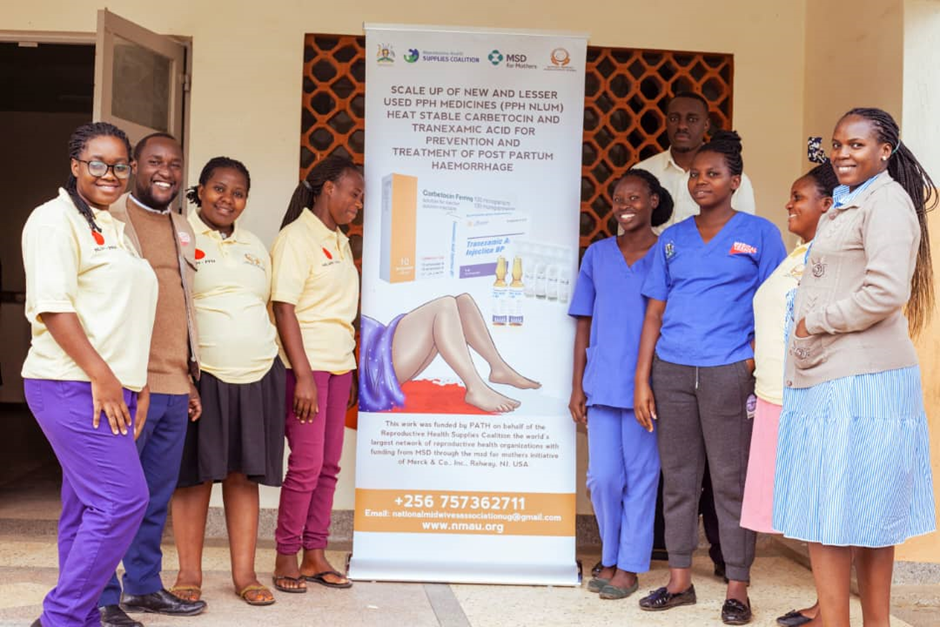
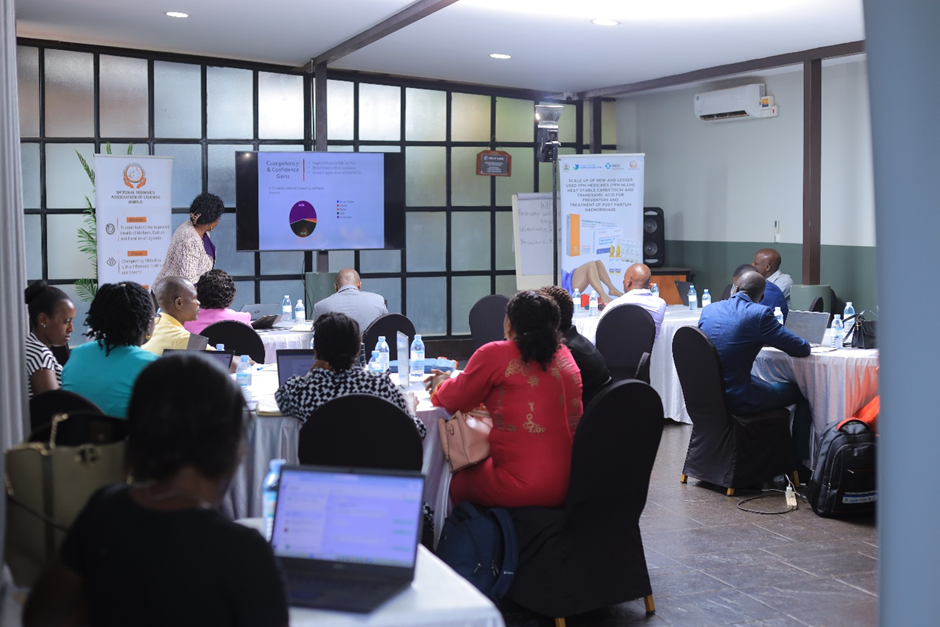
Fifteen facility-based champions were first trained as master trainers using Ministry of Health–approved emergency obstetric and newborn care modules. In turn, they trained 493 maternity care providers, including midwives, clinicians, theatre staff, district pharmacists, and records officers. Effective PPH management relies on a coordinated team approach, and the project emphasized that every staff member has a role to play — even those not directly providing clinical care.
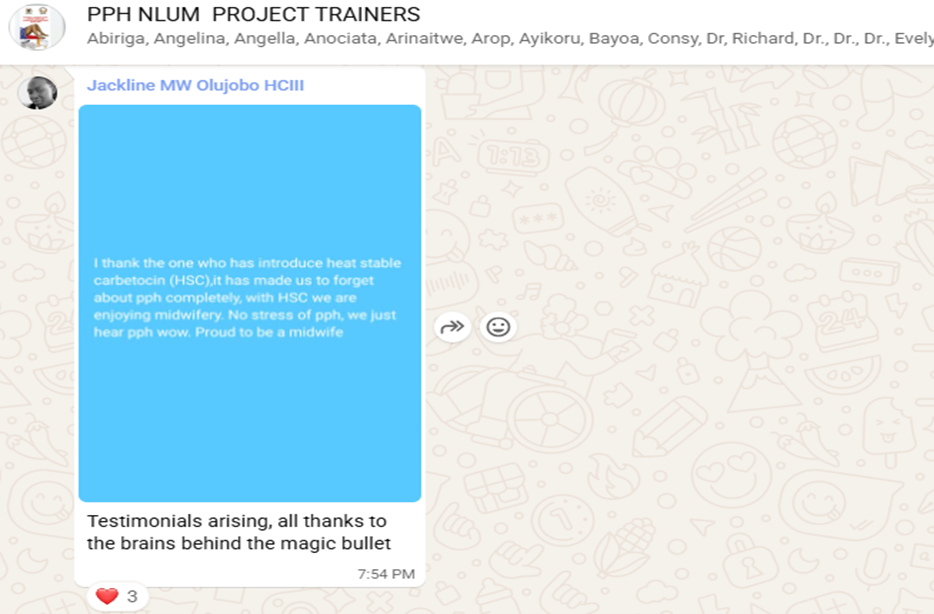
Training sessions focused on the proper administration of HSC for the prevention of PPH and TXA as part of the WHO-recommended E-MOTIVE treatment bundle, which replaces the traditional reliance on visual estimation of blood loss — which is often inaccurate — with objective measurement and a rapid clinical response that can be initiated as soon as excessive bleeding is detected. Rather than one-off workshops, the program used a “low-dose, high-frequency” model — shorter, repeated, simulation-based sessions held on site and reinforced through practice. Facilities received job aids, posters, and digital reference tools, and WhatsApp communities of practice connected providers with mentors for real-time clinical advice.
Early shortages of HSC threatened to slow the rollout, but NMAU worked closely with Uganda’s Ministry of Health, UNFPA, district pharmacists, and other district leaders to resolve logistical bottlenecks. In the meantime, unused HSC stock was redistributed from facilities that had already completed their training to those still conducting sessions. This allowed training and mentorship activities to continue uninterrupted while new supplies were being arranged.
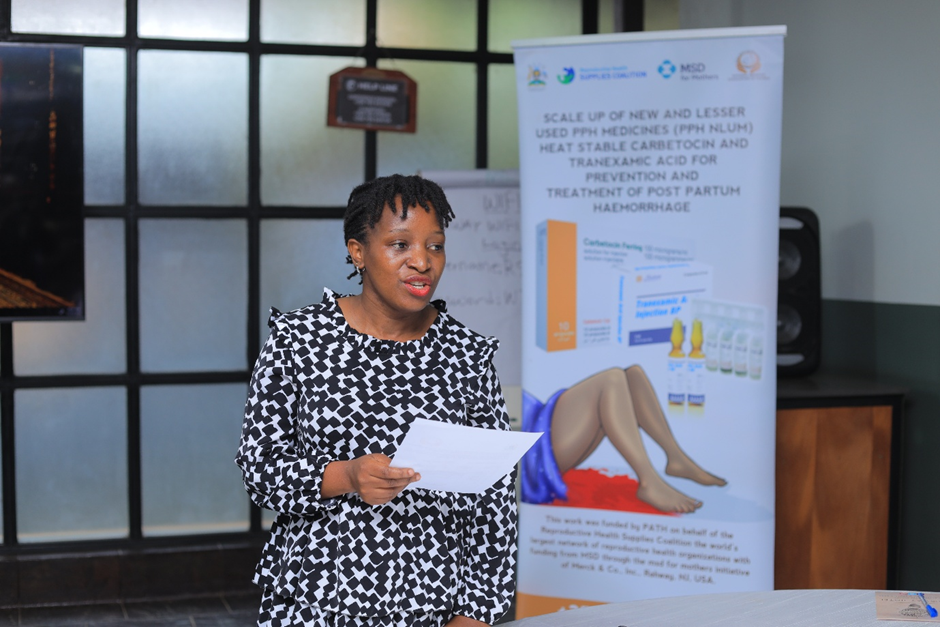
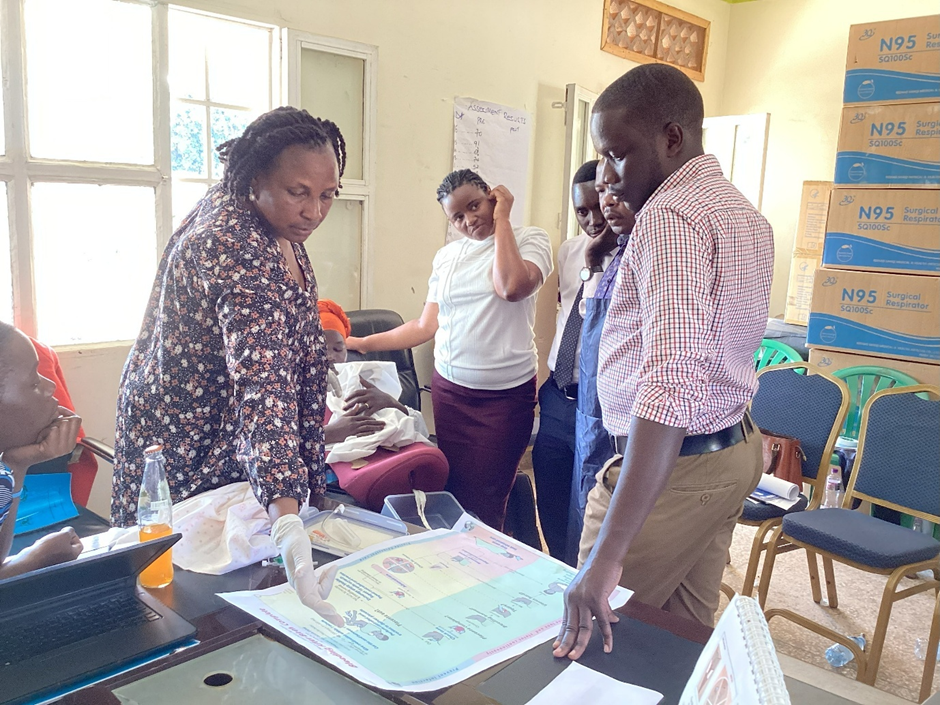
Mentors conducted on-site follow-ups, reviewing case records, checking dosing accuracy, and helping teams close treatment gaps. The approach improved confidence and consistency in using both medicines. As confidence grew, so did demand. Health workers began requesting additional doses through sub‑national coordination mechanisms such as Local Maternity and Neonatal Systems, established by Uganda’s MOH to strengthen maternal and newborn care at regional level. Providers who had already used HSC shared positive experiences, prompting facilities that had not yet received the product to inquire about it.

“This was truly a midwife‑led project because midwives are on the frontline of PPH. PPH is a nightmare for any midwife, and our ears are always tuned to listen for solutions — anything that can help us avoid facing another PPH case. So, when we midwives heard about this new drug, HSC, now commonly called the “magic bullet” in Uganda, everyone was eager to learn more.”
Annette Evelyn Kanyunyuzi
Nurse-midwife & President National Midwives Association of Uganda
Overcoming hesitancy with open exchange, problem-solving
Following training, some initial hesitancy to use HSC was expected, reflecting normal behavior‑change patterns. While early adopters quickly embraced the new medicine, some midwives — particularly those in lower‑level facilities — were cautious due to concerns about managing potential PPH cases if the drug did not work as expected. This hesitancy decreased rapidly thanks to the reliability of the drug even in settings without cold‑chain infrastructure and strong peer support and active engagement within the Community of Practice. Providers shared positive experiences using HSC without complications, and the group collaboratively reviewed cases where side effects were suspected. This open exchange, reassurance, and collective problem‑solving built confidence and significantly reduced fears around adopting HSC.
When NMAU first began expanding the use of TXA, they also noted instances where providers were confusing it with another medicine called bupivacaine, which is used for spinal or epidural anesthesia.
TXA and bupivacaine can be mixed up in busy labor wards not because the medicines themselves are similar — they are very different — but because of packaging and workflow factors. Both medicines come in small, clear glass ampoules of similar size and shape, and both are commonly used in obstetric settings. In fast‑paced or emergency situations, especially when medicines are stored close together, this increases the risk of picking up the wrong ampoule.
To address this, they brought the Association of Anaesthetic Officers into the training and involved both the anaesthetic officers and the anesthesiologists to strengthen safe and proper use of TXA.
Looking forward
NMAU has also begun working with midwifery, medical, and nursing schools, recognizing that integrating HSC and TXA clinical guidance into pre‑service training could be transformative for the next generation of health workers.
The initiative also helped drive national momentum. With Ministry of Health backing and partner advocacy, procurement has surged: UNFPA plans to purchase 200,000 HSC doses in 2026, while UNICEF has committed one million more, positioning Uganda to scale up lifesaving PPH care nationwide.
Demand for HSC is exceptionally high across NMAU’s midwives’ network. The front-line health workers regularly ask about the drug and when their facilities will receive it, and how to include it in their procurement requests. While it is encouraging that HSC is becoming available, the next challenge is ensuring that the “magic bullet” medicine is used correctly and consistently so that women receive its full benefit. Midwives repeatedly emphasize that preventing PPH cannot rely on PPH medicines alone. High‑quality care throughout labor and delivery remains essential.
*The small grants mechanism, or the Catalytic Opportunity Fund for Introduction and Scale-Up of New and Lesser-Used Postpartum Hemorrhage Medicines (NLUM-PPH COF), is managed by RHSC and the Clinton Health Access Initiative and funded by MSD for Mothers and the UK’s Reproductive Health Supplies Programme. MSD for Mothers is an initiative of Merck & Co., Inc., Rahway, NJ, USA.