


Dr. Janet Byaruhanga, Senior Programme Officer at the African Union Development Agency (AUDA-NEPAD), shares her perspective on advancing health equity, economic resilience, and pharmaceutical manufacturing across the African continent.

A 20-year journey in local health commodity manufacturing in Africa
Trained first as a physician, and later in public health and business management, Dr. Janet Byaruhanga has spent nearly two decades working within the African Union system. At AUDA-NEPAD she contributes to advancing the Pharmaceutical Manufacturing Plan for Africa (PMPA) and broader efforts to strengthen access to essential medical products and health technologies across the continent.

“AUDA-NEPAD’s PMPA program sits at the intersection of public health, industrial policy, and economic development.”
Janet Byaruhanga
AUDA-NEPAD
The origins of that journey stretch back to 2005, when African Union Heads of State met in Abuja as HIV, tuberculosis, and malaria were devastating communities across the continent. While lifesaving antiretroviral medicines had become available globally, Africa remained heavily dependent on imports.
That moment catalyzed the PMPA, an initiative designed to build long-term capacity for local pharmaceutical production.
However, early efforts quickly revealed a foundational challenge: fragmented, and often weak, regulatory systems across the continent.
“Regardless of our desire for self-reliance,” Dr. Byaruhanga explains, “we could not depend on products whose quality we could not assure.”
This realization led to the African Medicines Regulatory Harmonization initiative, which ultimately contributed to the establishment of the African Medicines Agency (AMA). The agency’s goal is a harmonized regulatory framework capable of ensuring safety, efficacy, and investor confidence, an increasingly important priority in a post-COVID world where global supply chains have proven fragile.
Beyond regulation: building an ecosystem
At AUDA-NEPAD, strengthening pharmaceutical manufacturing is seen not only as a health priority but also as part of Africa’s broader industrialization agenda. The vision is two-fold: to ensure reliable access to affordable, quality-assured medical products for African populations, while simultaneously strengthening economic resilience and regional value chains.
Small and medium-sized pharmaceutical manufacturers play an important role in the ecosystem.
Access to affordable long-term capital remains a critical constraint for the sector. Pharmaceutical manufacturing is highly capital-intensive, yet financing available to African manufacturers is often short-term and costly, she explains. AUDA-NEPAD is therefore working with partners to map the financing landscape and explore development finance solutions better suited to long-term industrial growth.
Technology access, workforce development and research capacity are also part of the broader ecosystem needed to strengthen Africa’s pharmaceutical sector.
“AUDA-NEPAD works with partners to support manufacturers through technical assistance, market intelligence, and innovative financing approaches.”
Janet Byaruhanga
AUDA-NEPAD
A strategic, prioritized approach
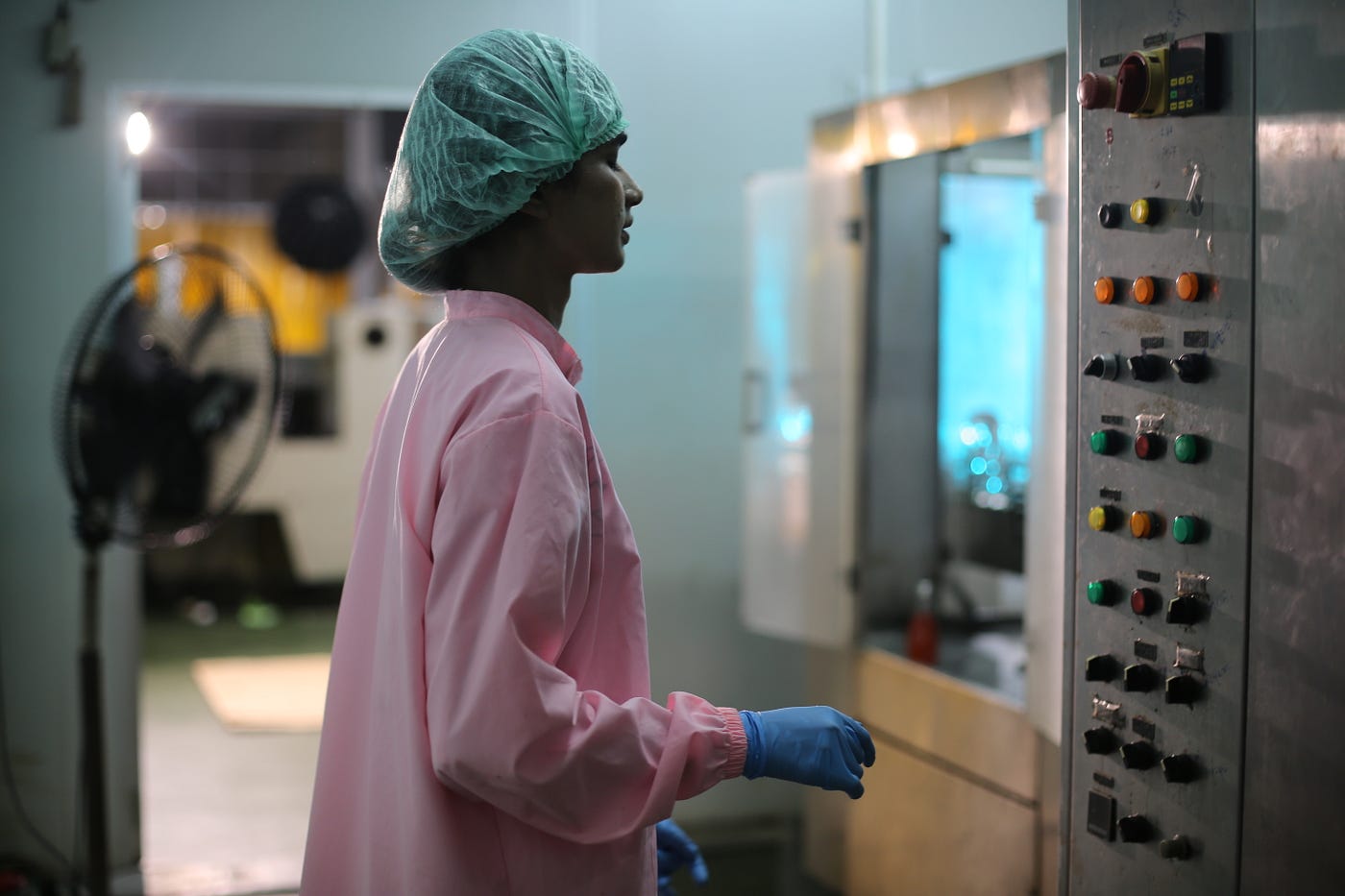
Recognizing the importance of prioritization, AUDA-NEPAD has advanced a continental strategy identifying 24 priority products for regional manufacturing in Africa, seeking to align public health priorities with industrial development by focusing investments where sustainable manufacturing capacity can realistically be built. Rather than encouraging every country to manufacture every medical product, the strategy promotes regional specialization and market integration, leveraging the African Continental Free Trade Area (AfCFTA), to support viable pharmaceutical production hubs across the continent.
A special focus on maternal health supplies
In parallel, AUDA-NEPAD is expanding its work on maternal health commodities, particularly those used to prevent and treat post-partum hemorrhage (PPH), one of the leading causes of maternal mortality in Africa. Among the key evidence sources informing the priority medicines list was the Manufacturing Landscape Assessment for Maternal Health Supplies in Sub-Saharan Africa, produced under RHSC’s Compass Initiative, a suite of strategies and tools designed to safeguard reproductive health access in the wake of COVID-19 and improve preparedness for future crises.
With key partners, AUDA-NEPAD is convening continental and regional policy dialogues with governments, regional economic communities, and development partners to strengthen coordination around key postpartum hemorrhageinterventions. This work focuses on improving policy alignment, financing frameworks, and market visibility for priority maternal health products, while also exploring opportunities to support sustainable production within Africa.
“Strengthening reproductive health supply security and building local manufacturing capacity are closely linked,” Dr Byaruhanga notes. “Ensuring reliable access to life-saving maternal health medicines requires both strong health systems and resilient regional production capacity”.
Coordination in a growing continental architecture
Africa’s health architecture has expanded significantly over the past decade, with newer institutions such as the Africa Centers for Disease Control and Prevention and the African Medicines Agency spearheading the continent’s health programs. Now more than ever, systemic coordination is key. “It is an ecosystem, and no single institution can do this alone,” Dr. Byaruhanga says.
“It is an ecosystem and no single institution can do this alone”
Janet Byaruhanga
AUDA-NEPAD
This philosophy also extends to global partnerships. AUDA-NEPAD continues to engage with international partners, development finance institutions, and networks such as RHSC to strengthen knowledge sharing, coordination and advocacy around reproductive health supply security.
By working through collaborative platforms, AUDA-NEPAD aims to ensure that new initiatives build on existing efforts rather than duplicating them.
A long journey — with growing momentum
The work ahead remains complex and often highly technical. But for Dr. Byaruhanga, the stakes are clear.
“This is not just about producing medicines,” she says. “It is about sovereignty, resilience and ensuring that African populations have reliable access to the health products they need”.
Nearly 20 years after first joining the African Union system, she continues to work with partners across the continent — and the world — to advance that vision.