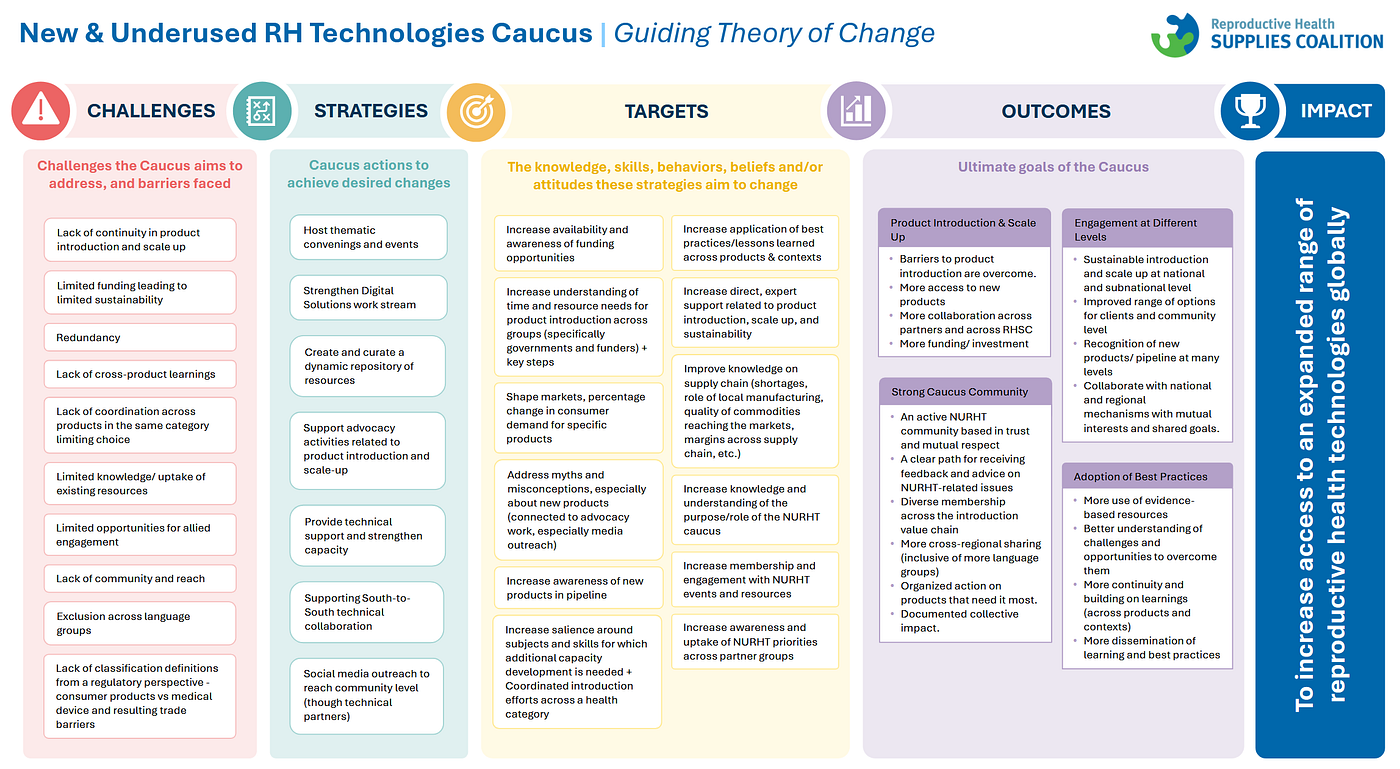


Consider the following reproductive health (RH) products: A menstrual cup, emergency contraceptive pills, the copper intrauterine device (IUD), injectable contraceptives, heat-stable carbetocin, and the Clue app. Which ones are new? Which ones are underused? Which are both?
And, most importantly: why does it matter?
Since 2008, the New and Underused Reproductive Health Technologies (NURHT) Caucus has sought to increase choice of available RH technologies by focusing on common barriers and challenges in product introduction and scale-up. The NURHT Caucus works to expand the supply of new and underused RH technologies through the public, private, and social marketing sectors while fostering collaboration and knowledge sharing.
Historically, the NURHT Caucus focused on a defined set of RH commodities. However, over the years the RH supplies environment has evolved. We now see that what distinguishes something as “new” or “underused” will vary by context and geography. At the 2023 General Membership Meeting (GMM), RHSC members encouraged us to embrace a more inclusive and dynamic interpretation of the NURHT Caucus remit, to reflect the varying stages of product introduction and scale-up, geographic context, and other nuanced factors influencing a product’s status. As a result, we’ve revisited the scope of RH technologies included within the NURHT Caucus through deep dives at the GMM, further synthesis in Caucus meetings, and the efforts of a focused, voluntary sub-group.
A new approach
Many of the challenges and solutions tied to RH product introduction and scale-up are similar across many commodities and technologies. A new approach looks for synergies across products rather than isolate a select handful of products. In doing so, we widen the tent.
Four major shifts
Four major shifts in the NURHT Caucus’s remit are being adopted:
Shift 1
From a defined list of 13 RH technologies on which to focus → towards a set of common criteria that can be interpreted within members’ own contexts, yet around which shared learning can be organized;
Shift 2
From focusing only on quality contraceptive and maternal health commodities → towards a wider sexual and reproductive health (SRH) remit that includes quality supplies and technologies that advance outcomes for menstrual health, sexual health, and beyond, including those in the development pipeline;
Shift 3
From a focus only on material SRH products (i.e., those that travel through traditional supply chains) → towards including those that are also partially- or wholly delivered via digital means (e.g. fertility awareness method apps); and
Shift 4
From a focus on “new” and “underused” → towards a focus on “new” and/or “under-accessible” within a given context.
What do we hope this unlocks? More relevance, more engagement, more value for members, accelerated learning on product introduction and scale-up, and greater access to new and under-accessible products.
A more detailed version of the shifts and the criteria behind them can be found in this brief.
What do we want from you?
➡️ Does this topic interest you? 📝 Sign up to be a member here
➡️ Already a member? 🤝 Engage in the group through our listserv and virtual meetings! Here are a few ideas:
- 🔄 Circulate resources you’ve found helpful for scaling RH products.
- 📚 Share some key lessons you’ve learned in expanding access to these products, and help draw connections between experiences from product to product.
- ❓ Ask a question about a challenge you’re facing or offer your support or expertise! 💬
- 🚀 Introduce us to new technologies and approaches that are facilitating access to SRH products.
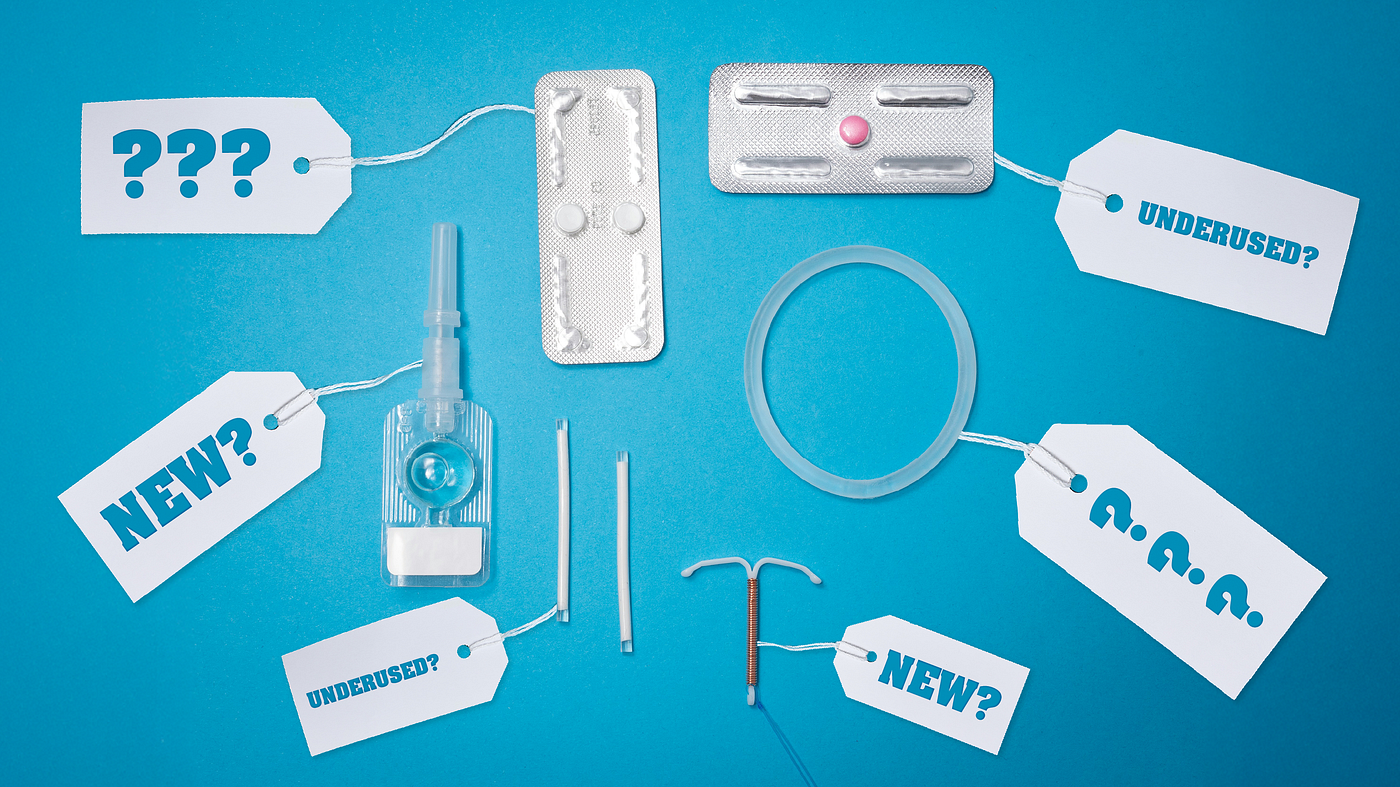
- 🧭 Take a look at our Guiding Theory of Change and tell us what you want to see more (or less) of from the Caucus!