

Why are so many women volunteering their time to translate and share this simple resource?
In March this year, the RHSC launched a set of comprehensive, simply worded, clearly illustrated materials written by Lucy Wilson, an active member of the Menstrual Health Supplies workstream, with support from several other workstream members. The resource, available as a one or two-page poster or a booklet, contains practical information about managing menstruation. It answers questions like:
- What are the available options?
- What are the pros and cons of each?
- What’s expensive?
- What to do about pain?
- Will my contraceptive affect menstruation?
The explosion of excitement and activity following the publication of the English-language Managing Menstruation: Know Your Options tool was completely unexpected.
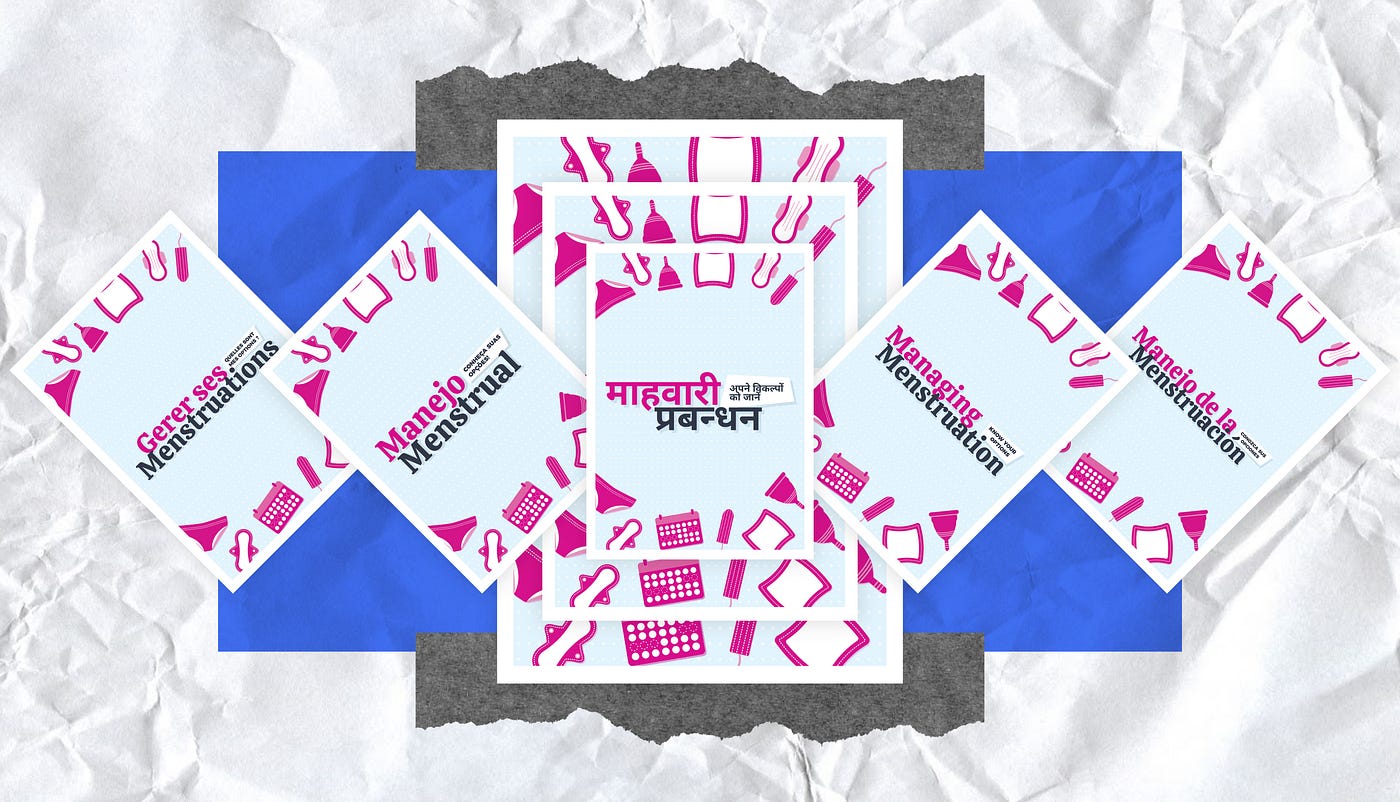
And just like that, the Hindi version went online this month
- RHSC’s ForoLAC staff translated it immediately into Spanish. And then things got very busy.
- Valentine Adolphe, an independent consultant, offered to translate the tool into French pro-bono. With RHSC editing support, a French version went public.
- Then, Brazil-based psychologist and menstrual health educator Ursula Maschette wrote asking permission to produce a Portuguese translation because there was a vast unmet need for such accessible information in Brazil, she explained. Again, RHSC supported editing and production and a Portuguese version went online.
- Almost immediately after this, Aarushi Gupta a young menstrual health activist from New Delhi wrote to us, asking if she could translate the resource into Hindi. Menstrual Health Supply workstream chair Tanya Mahajan offered to proofread and the RHSC designed the materials. And just like that, the Hindi version went online this month.
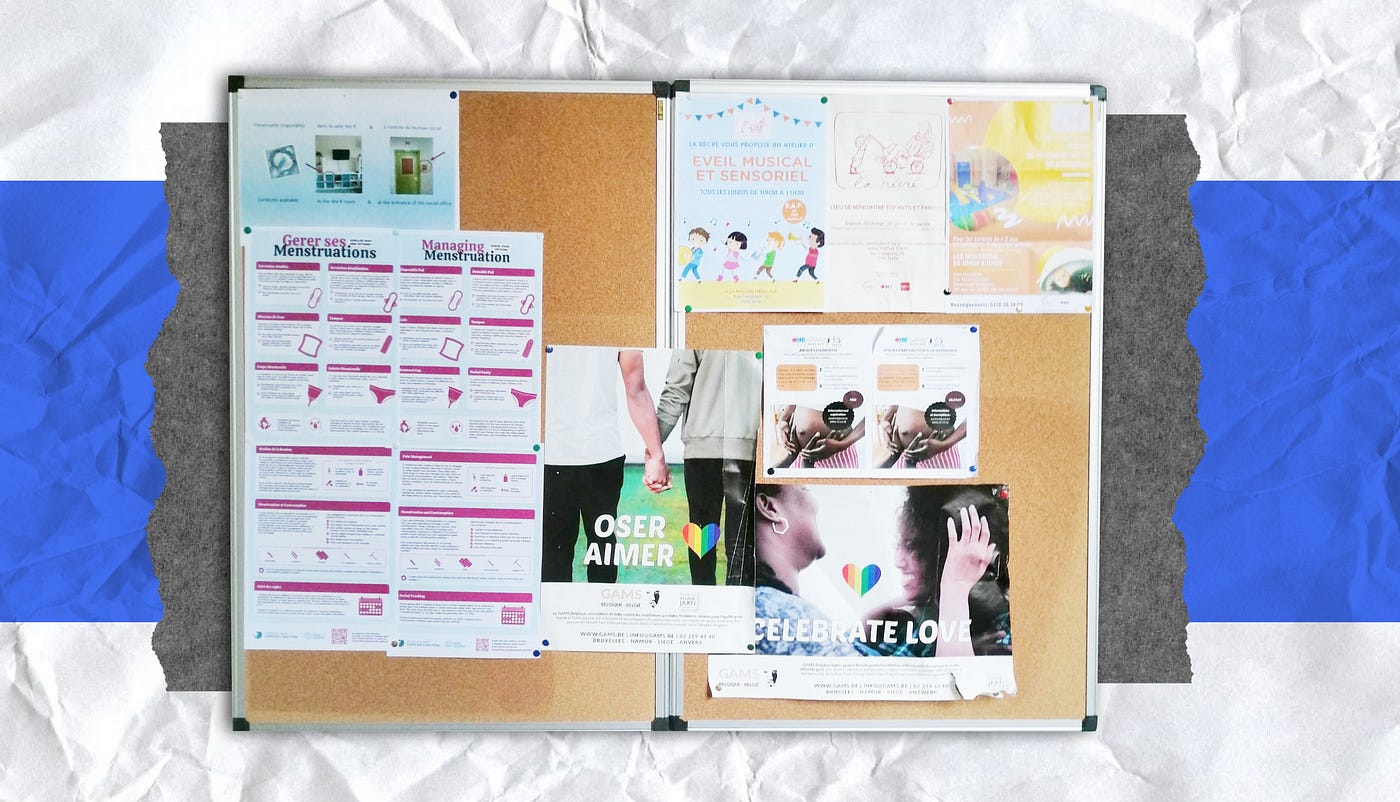
- A refugee centre in Brussels is using the tool for women, and unaccompanied girls under 18, newly arrived from Eritrea, Somalia, Cameroon, Nigeria, and the Democratic Republic of Congo.
- Both UNFPA Dominican Republic and APROFA Chile, a Fos Feminista affiliate, have plans to print and disseminate the Spanish-language materials nationally.
- A translation into Nepali is under discussion…
… and so it continues. The beauty of all this is that neither author Lucy nor the RHSC has pushed aggressively for these materials to be translated or disseminated. All these women reached out to us from their own corners of the world, first expressing appreciation of the toolkit, and second, volunteering their time and expertise just so that that this valuable information can reach more people.
All these women reached out to us.
Why?
Sadly, menstruation is still a taboo subject in many parts of the world. Just this year (2022), Plan International’s survey of 4,127 boys and young men from four countries — Brazil, Indonesia, the Netherlands and Uganda — found that menstruation was considered a ‘private matter’ for girls and women. The respondents, aged between 16 and 25, admitted they frequently associated periods with words such as ‘dirty’ (55%), ’embarrassing’ (31%) and ‘disgusting’ (38%).
‘Dirty’, ‘Embarrassing’, ‘Disgusting’
Accessing information about supplies has always been difficult in parts of the world, where people just don’t talk about these things openly. This toolkit sidesteps that taboo with a QR code. Users can scan and download the materials onto their own phones and learn about their options privately, without embarrassment.
This toolkit is also special in other ways.
There are many existing resources offering information on managing menstrual bleeding, Lucy explains. But most have limited audiences because they are not formatted for stand-alone use, do not provide unbiased, unjudgmental information on the full range of product options, and/or are not publicly accessible free of charge.
Also, most don’t offer advice about pain management, and no other resource at the time of publication explained the role contraception can play as a means for menstrual management.
It’s the clear graphics and the clean layout that appealed to Veronique Tarasovici, a Brussels-based social worker who is using these resources to teach refugee women and girls about choice at a migrants’ counselling centre. “These young women have had turbulent experiences in camps, fleeing abuse and extreme poverty, and the whole concept of choice is alien,” she says. “Because many of them don’t have high levels of literacy, this simple approach is very helpful.”
If you think there is a need for Managing Menstruation to be produced in your own language and you are interested in supporting a translation, please get in touch with Lucy Wilson at [email protected].