


LAPTOP Scholar Larry Ng’andu is a District Laboratory Coordinator with Zambia’s Ministry of Health. We caught up with him halfway through his Masters course in Supply Chain Management at The Copperbelt University
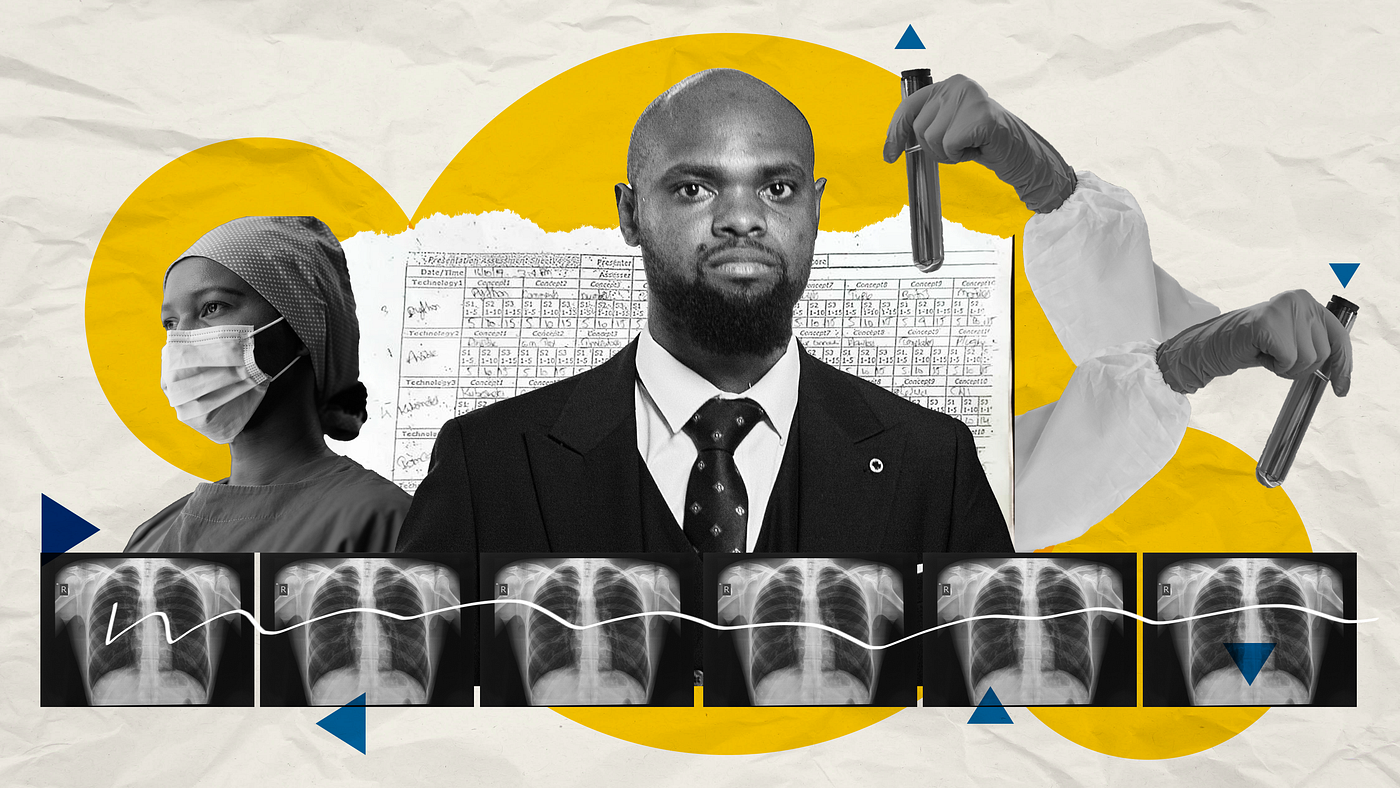
Q: Tell us a little about your work.
I’m a biomedical scientist working in a laboratory which tests mothers, pregnant women, young children, and adolescents for HIV. We also test infants who have been exposed to HIV and our lab provides cervical cancer screening.
In addition to testing, I manage supplies for 19 health facilities, making sure test kits for HIV, tuberculosis, and other conditions are available. If kits run out, mothers can leave without having critical tests done. These labs use GeneXpert machines, and I have to make sure they have the cartridges and reagents they need. Without these, there can be considerable service interruption.

“People in Zambia die even today without the right medicines for TB. This loss made me think a lot about lifesaving medicines and gave me an early interest in working in healthcare”
Larry Ng’andu
Q: What inspired you to work in health?
When I was in school, a close relative died of tuberculosis. It was very hard to accept because TB is so manageable. Yet people in Zambia die even today without the right medicines for TB. This loss made me think a lot about lifesaving medicines and gave me an early interest in working in healthcare, especially in diseases which are preventable and treatable.
Q: Why is supply chain knowledge important in lab settings?
Most supply chains are managed by pharmacy staff, and in labs, knowledge about supply chain systems can be limited. Usually, just one lab staff-worker is trained to handle storerooms or report stock levels. If that person is away, there can be gaps in reporting and stock management. Training lab staff in logistics means supply chain responsibilities don’t fall on just one person and are shared by the whole team, thinking about commodity security together.
Q: How did receiving a LAPTOP scholarship change your career?
The scholarship has given me formal training in supply chain management, allowing me to anticipate stockouts more precisely, track inventory, and plan ahead using more professional tools. My studies are also giving me the confidence to mentor younger scientists and take part in national events and discussions.
“We need to break down the siloed thinking: “he is a lab worker, she is a scientist”. Everyone working in healthcare needs to understand supply chains!”
Larry Ng’andu
Q: What challenges do you still face in supply chains?
Even with training, supply chains face unpredictable delivery times, long lead times, and funding uncertainty. This makes forecasting very hard, sometimes causing overstock or understock, and, at the end of the day, disrupting services. Getting all laboratory staff engaged in the process is really important when it comes to reducing these interruptions. We need to break down the siloed thinking: “he is a lab worker, she is a scientist”. Everyone working in healthcare needs to understand supply chains!
Q: What hopes do you have for your career once you complete your Master’s?
I see myself working more in connecting the public and private sectors. Right now, it’s common for hospitals to run out of supplies, and patients then have to turn to private pharmacies, but medicines can be expensive in private facilities. I want to help make the collaboration between suppliers and health providers smoother to provide affordable solutions for patients, and to make supplies increasingly affordable and accessible to everyone in my country.